

Core Sommelier Course (Fall Semester)

Wine knowledge is not wine skill.
Eight Sundays to close the gap.
Foundation + Intermediate · Professional Level III Certification
You already know more about wine than almost anyone you drink with. You know the regions. You have opinions about producers. You’ve read the books.
And you can still be handed an unmarked glass and have nothing systematic to say about it.
That is not a knowledge problem, and more facts will not fix it. Nearly every wine course sells knowledge — regions, grapes, maps, flashcards — and quietly trusts that tasting ability will show up on its own. It does not. Tasting is a separate skill, with its own method, and it has to be taught on purpose.
Core teaches both halves, side by side, for eight Sundays.
Sundays, Oct. 4–Nov. 29 · 1:30–6 p.m. · 109 S. 22nd St., Philadelphia
Core Sommelier $1,199 · No prerequisites · Includes 6 Months Wine Club Membership for Free (cancel anytime)
25 years in Philadelphia · Level III certification · 16 sessions
The Wine School of Philadelphia, ranked as one of the best sommelier training programs in America by students and professionals. — WineMaker Magazine, August–September 2024
Two courses, one semester
Every Sunday runs two sections back to back.
Foundation is the tasting half. It builds the sensory method — the mechanics of perception, the structural components of wine, the varietal fingerprints — and ends in blind identification.
Intermediate is the regional half. Grape varieties and the places that grow them: what each region makes, why it makes it that way, and how that arrives in the glass.
Foundation and Intermediate can be taken separately, one after the other. In Core they run side by side, so the regional material reinforces the sensory work while both are still fresh.
The Foundation half: how we teach you to taste
Some people seem to be born with it — the ones who name four things in a glass while you’re still deciding whether it’s red fruit or black. It looks like talent.
Much of it is training. What you’re seeing is sensory memory, built deliberately, plus the vocabulary to retrieve it. That can be taught, and this is the part of the course that teaches it.
Week one is the machinery. What you call taste is three systems working at once: the olfactory bulb, the tongue, and the trigeminal nerve. You’ll learn the difference between smelling a wine and tasting it.
Then come the components. Acidity and the noble whites; tannin and the noble reds. Each class is based on science, but the approach is dynamic. Each step is backed up with wine tastings and even a few unorthodox experiments (you will never view jelly beans the same way).
What you’re building is a fingerprint for each grape. A fingerprint is our shorthand: the markers that most reliably separate a variety from everything else in a blind lineup. Pinot Noir: barnyard and roses. Sangiovese: red cherry and leather. Syrah: game. Grenache: wild herbs and lavender, what the French call garrigue. Merlot and Cabernet Sauvignon share green pepper and graphite.
The Varietal Lab, where those fingerprints get assembled into something usable under pressure. A distinction runs through this whole part of the course: you can detect an aroma without knowing what it is, recognize it without being able to name it, and only identify it when you can connect it to a specific reference and say the word. Blind tasting lives entirely in that third category. The lab is where you get there.
By week seven you’re tasting blind. Not guessing — matching what’s in the glass against patterns you’ve spent six weeks installing. Week eight, you’re examined on it.
The Intermediate half: grapes and the places that grow them
The other section each Sunday covers the wine world itself — the regions behind most of what’s on any serious list, and the grape varieties that define them.
France. North America. Australia. Italy. Spain and Portugal. South America. Seven weeks, one region at a time, working through what each place grows, why it grows there, and what that produces in the bottle.
This is where the sensory work acquires context. Knowing that Cabernet Sauvignon runs on green pepper and graphite is useful. Knowing why Left Bank Bordeaux and Napa Valley take the same grape to different places — climate, site, ripeness, winemaking intent — is what lets you work backward from a glass to a region rather than only to a variety.
The two halves meet formally in week four, on Old World against New World: not a debate about which is better, but a working framework for the stylistic differences you can actually taste — where the fruit sits, how the acid reads, what the tannin feels like — and where those differences come from.
What you’ll be able to do
- Approach an unfamiliar wine systematically instead of hoping something comes to mind.
- Recognize the varietal fingerprints of the noble grapes and name them out loud, in language another professional will understand.
- Identify major grape varieties blind — no label, no hints, no one naming the grape first.
- Read structure: place a wine’s acidity and tannin, and know what that tells you before you get to the fruit.
- Know how your own palate is calibrated, and correct for it.
- Speak with authority about the major wine regions and the grapes they’re built on.
- Explain why a Rioja and a Napa Cabernet taste the way they do, in terms of climate, site and winemaking rather than adjectives.
- Walk out with a method you’ll keep using for the rest of your life.
Who this is for
You do not need to work in wine to belong here.
The room holds line cooks and beverage directors, importers and distributor reps, winery staff, and people with no professional stake at all — who simply got tired of deferring to whoever ordered the bottle and decided to do something about it properly.
They sit the same exams and earn the same pin. They have almost nothing in common except a preference for being right over being impressive.
What the course is actually like
The teaching is old-school and deliberately demanding: lecture, guided tasting, discussion, instructor feedback, written exams. The work is a notebook, a spit cup, and an instructor telling you that what you just said about the glass was wrong.
Most students discover in the first two weeks that they knew less than they thought. That is the design, not an accident of it. Come with a notebook.
And it will cost you your Sundays — eight of them, most of the afternoon. We’d rather say that plainly than have you find out in week three. A course that asks for that much is a course that intends to change something.
Course schedule
Section 1 is Intermediate: regions and grapes. Section 2 is Foundation: tasting.
| Week | Section 1 — Regions | Section 2 — Tasting |
|---|---|---|
| One | Introduction to Wine Regions | Intro to Sensory Wine Tasting |
| Two | France | White Varietal Components |
| Three | North America | Red Varietal Components |
| Four | Australia | Old World vs. New World |
| Five | Italy | Varietal Fingerprint Lab |
| Six | Spain and Portugal | Winemaking 101 |
| Seven | South America | Blind Tasting |
| Eight | Regional Exam | Tasting Exam |
Sundays, Oct. 4 to Nov. 29. No class Nov. 8.
Exams and certification
Week eight is two examinations — one on regions, one on tasting, matching the two halves of the semester. Pass both and you earn Level III certification and the pin from the National Wine School.
The exams are graded. Not everyone who sits them passes, which is what makes the credential worth holding.
Where Core can take you
Core stands on its own as a complete professional wine education. It also opens the Advanced program — four semesters, 32 classes — and, after that, four semesters of self-directed master-level study. Few institutions in the country teach wine to that depth in a classroom.
Graduates own wineries — Jolie-Laide, Decibel Wines, Annadel Estate, Siboney Cellars, Cellar Beast Winehouse — and make wine at Truro Vineyards on Cape Cod.
They run beverage programs for Stephen Starr restaurants, Loews Hotels and the Chicago Yacht Club. They own Jet Wine Bar, Bloomsday, Race Street Cafe and Salt + Vine. They sell wine for Breakthru Beverage, Deutsch Family and Silver Oak. One founded The Hue Society.
They started here, on a Sunday afternoon, in this room.
I know firsthand how transformative the Wine School’s curriculum can be. — Tahiirah Habibi, founder, The Hue Society
Who teaches it
Keith Wallace founded the Wine School in 2001 and has spent 25 years teaching people to taste. A winemaker who worked in Napa before opening the school, he has contributed to Kevin Zraly’s Windows on the World Complete Wine Course, wrote Corked & Forked, and has taught at Drexel University. NPR’s All Things Considered interviewed him on industrial winemaking; CBS News named him one of Philadelphia’s top sommeliers.
Alana Zerbe is the school’s director of wine education and wrote the National Wine School’s Level One and Level Three curricula. She holds a J.D. and an LL.M. and practiced law in Washington before leaving it for this.
Both teach this course. Every week.
Why Core instead of two separate courses
Foundation and Intermediate are normally taken one after the other, a semester apart. Core runs them in parallel — the full sequence in half the calendar time, with each half feeding the other while it’s still fresh.
Taken separately, they run $999 each. Core is $299 less — and about $106 a class against $125.
Tuition
Included: course workbook and tasting materials, both in-class examinations, and Level III certification. Plus six months of our wine club for free (cancel anytime).
About the school
The Wine School of Philadelphia is in its 25th year. It is independent — not a licensee, franchise, or branch of a larger certifying body — which means the curriculum is written here and answers to no producer, importer or distributor. That independence is unusual in wine education, and it’s the reason the school exists.
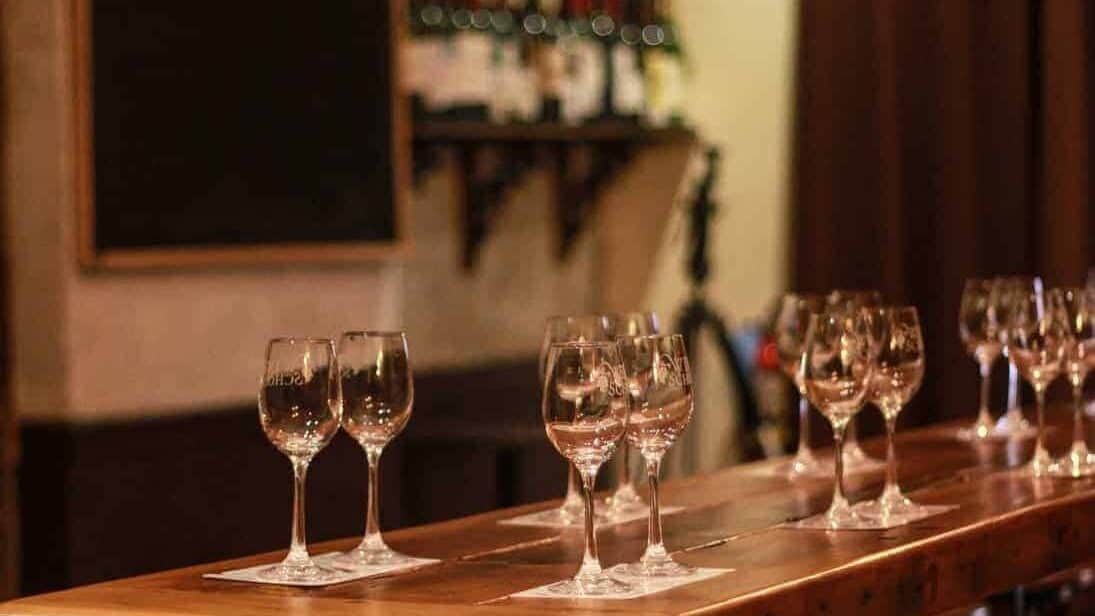
Classes are held at 109 S. 22nd St. in Rittenhouse, in a room built for the purpose: student desks made from a salvaged Lancaster farmhouse, vintage chalkboards, a private cellar. Instructors from the school have taught Penn’s Philomathean Society wine course every year since 2001.
For over 20 years, this independent institution has quietly trained the next wave of sommeliers, winemakers, and beverage professionals. — AWS Wine Journal, American Wine Society Educational Foundation, Summer 2025
The best wine school, period. Everything I’ve achieved in the world of wine, I owe to them. — Neil Ross, former director, Vernick Restaurant Group
I got my start at the Wine School of Philadelphia. You can’t go wrong, either. — Daniel Brennan, winemaker and owner, Decibel Wines
Philadelphia Inquirer readers named the school a top Philadelphia trade school in 2026.
Fall Core Sommelier Course
Sundays, Oct. 4 – Nov. 29 · 1:30–6 p.m. · No class Nov. 8